Before you pay for SEO
SEO can send more people into the same uncertainty. Use this guide to decide whether your public enquiry route is ready for more search visibility.
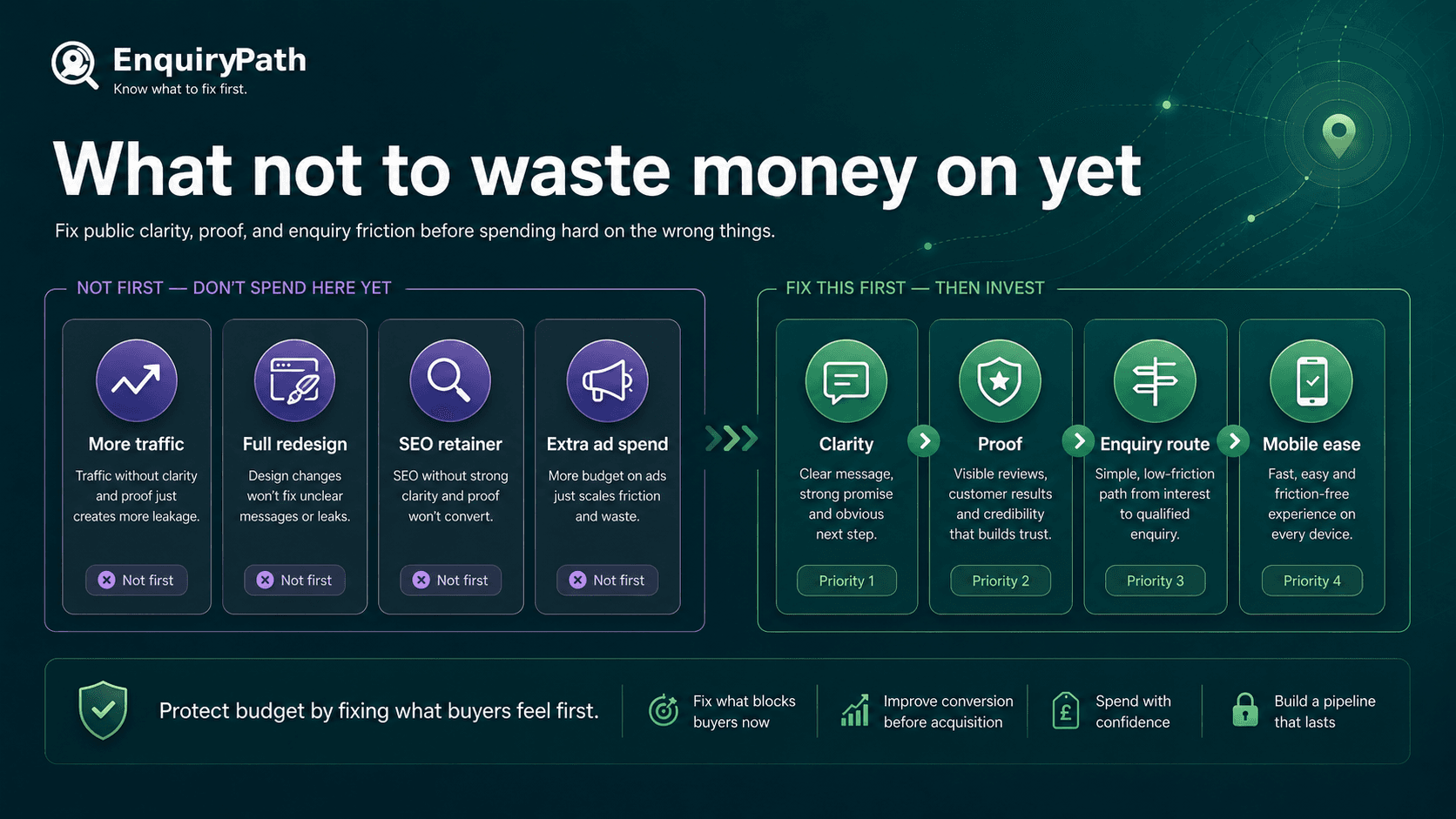
Traffic spend works harder when the public enquiry route is already clear, trusted and low-friction.
Quick self-audit
Run these checks first
- If rankings improved tomorrow, which page would new visitors land on?
- Does that page answer the buyer's basic trust, service and location questions?
- Do Google profile details and reviews support the same message as the website?
- Will you measure enquiries, useful interactions and buyer questions as well as rankings?
Watch out for
Common enquiry leaks
- Starting SEO before agreeing what the website should make clearer.
- Treating traffic as the answer when the contact route is weak.
- Judging success only by rankings or impressions.
- Publishing generic articles that do not help a buyer choose or enquire.
Fix-first order
What to improve first
- 1Choose the service pages that matter commercially.
- 2Make each page clearer, more credible and easier to act on.
- 3Align Google profile, reviews and directory copy with the website.
- 4Then use SEO to bring more relevant people to a better path.
Field guide
Work through the sections in order if you are diagnosing your own site. If you already know the weak spot, jump straight to the relevant section and use the checks as a practical brief.
SEO is useful when the destination is ready
SEO can be valuable. Good search visibility can help the right people find a business at the moment they are looking. The problem is when SEO is bought before the public enquiry path is ready.
If the service page is vague, the Google profile is thin, reviews do not support the offer or the contact route feels awkward, SEO may simply increase the number of people seeing the same uncertainty.
For a UK SME with a limited budget, the key question is not simply can we rank. It is what will happen when a relevant buyer lands on the page.
Work out whether you have an SEO problem or an enquiry-path problem
Before you sign a retainer, separate visibility from conversion confidence. Otherwise you can spend months improving search numbers while the enquiry route remains weak.
- If very few relevant people find you, visibility may be part of the issue.
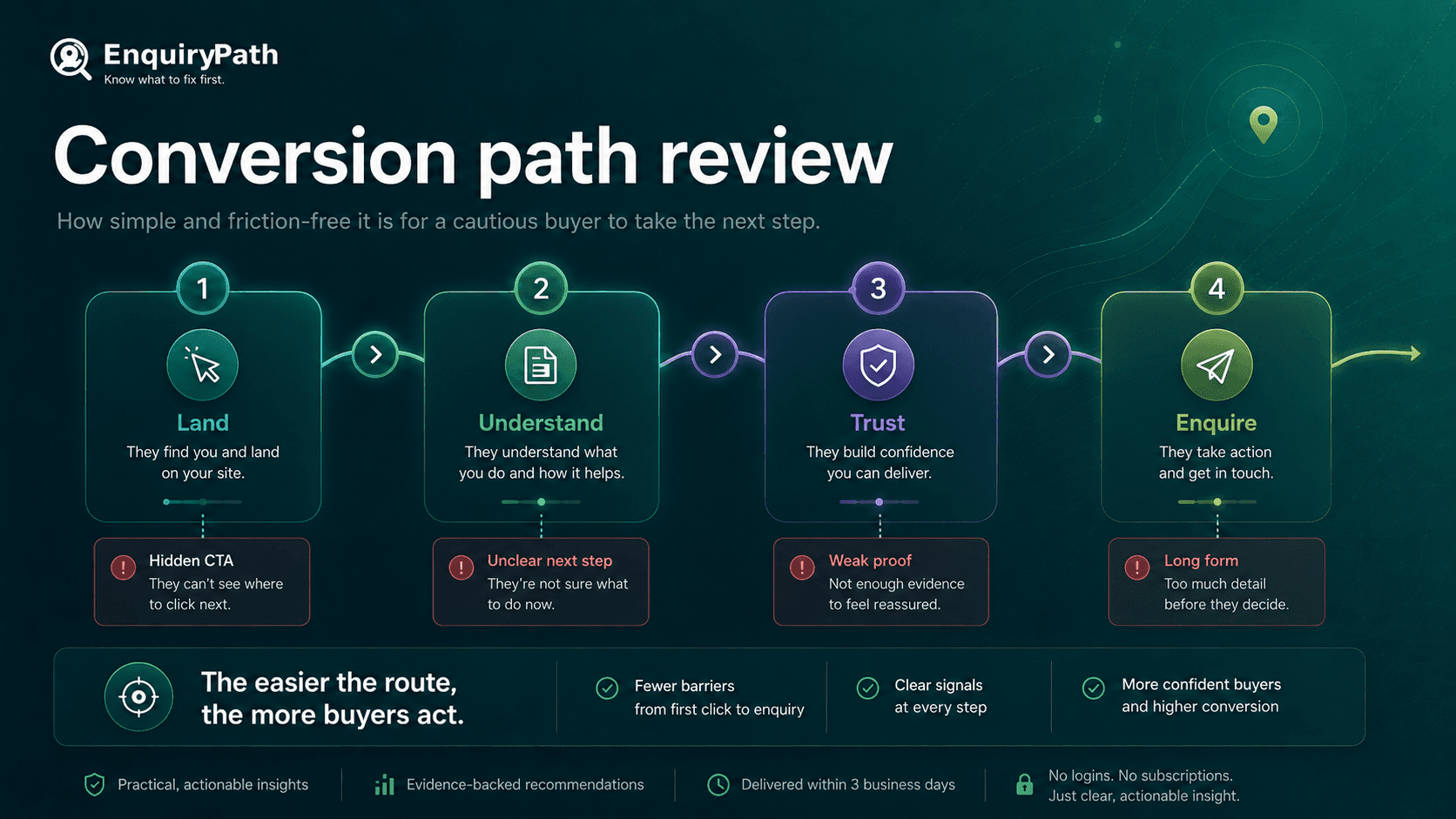
- If people visit but do not enquire, clarity, proof or friction may be the issue.
- If people enquire but are poor fit, service positioning may be the issue.
- If people call with basic questions, the website may not be answering buyer doubts early enough.
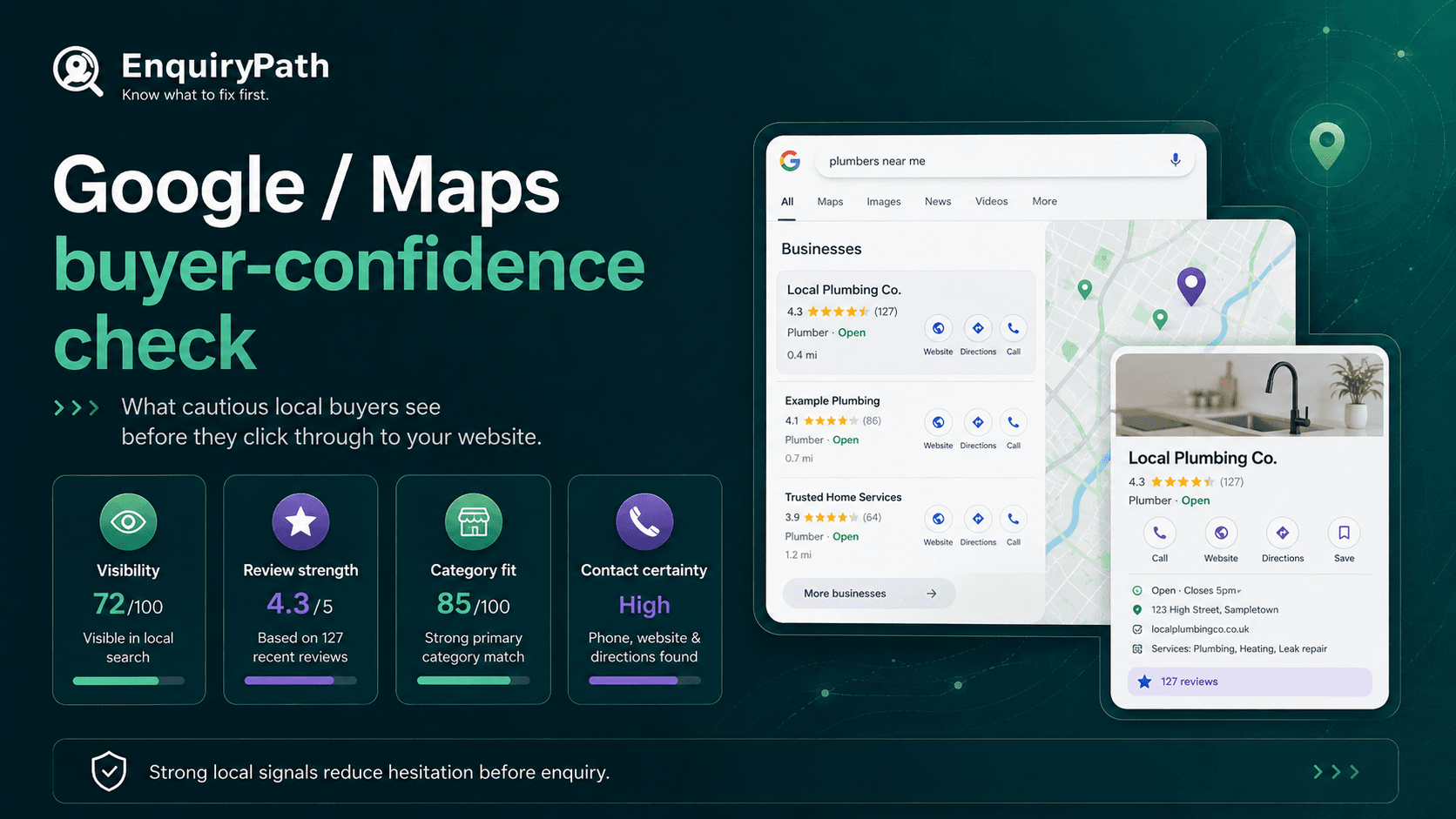
- If competitors appear more credible in search or maps, public trust signals may be the issue.
Use an SEO-readiness scorecard
Score each important service page before investing heavily in SEO. A page does not need to be perfect, but it should be good enough to deserve more attention.
- Search intent match: does the page answer the reason someone searched?
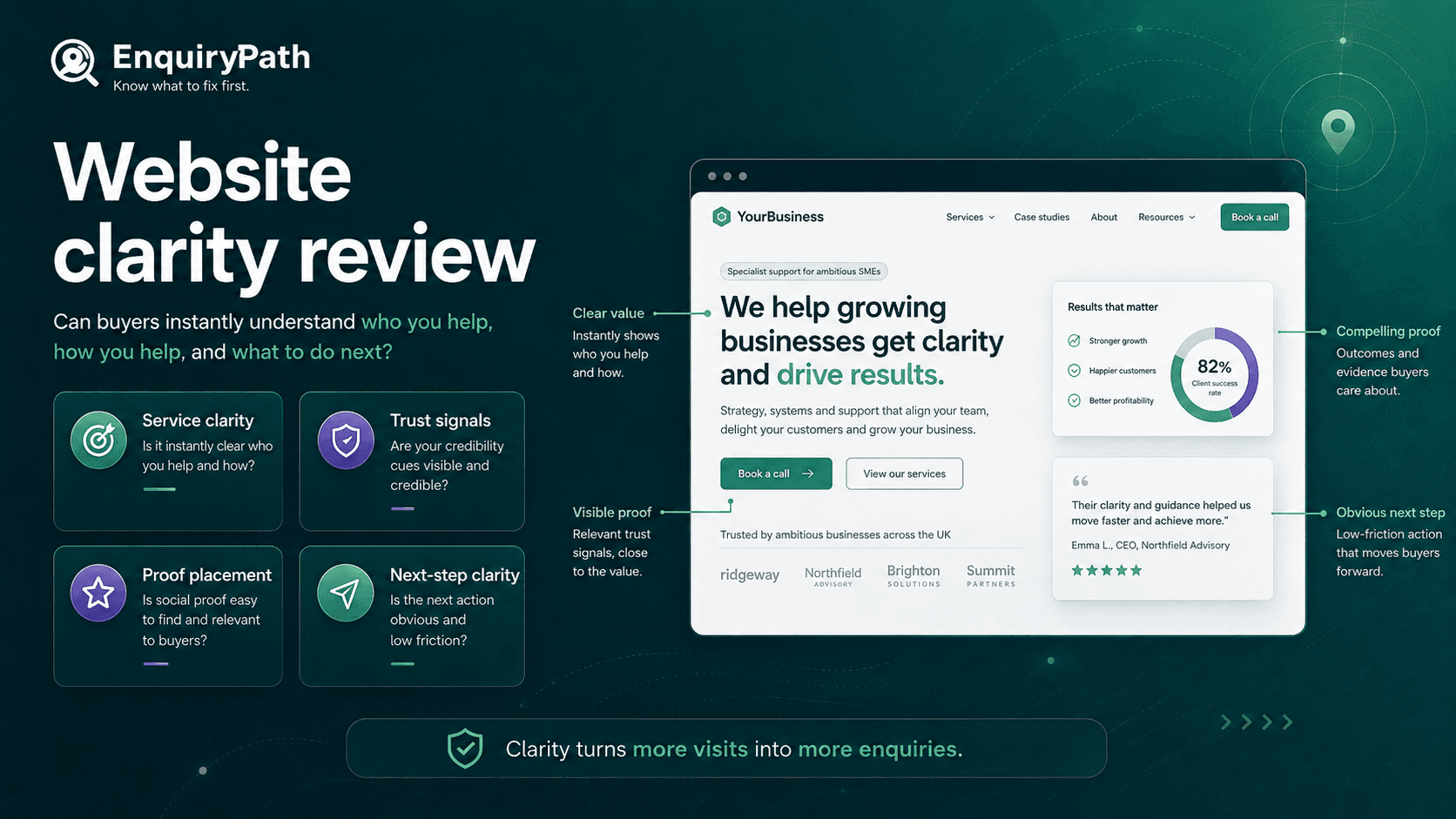
- Service clarity: is the offer named and explained without jargon?
- Buyer fit: does the page say who the service is for and when it is relevant?
- Trust: are reviews, examples, credentials or process details visible?
- Local relevance: does the page make geography or service area clear where needed?
- Next step: is the enquiry action obvious and appropriately low-friction?
- Measurement: can you tell whether better visibility produces better enquiries?
Choose the pages that matter commercially
A common SME mistake is spreading SEO effort thinly across too many pages. Start with the pages most likely to produce useful enquiries if they were clearer and easier to find.
- Core service pages with real commercial value.
- Location or service-area pages only where they are genuinely useful and not spammy.
- Comparison or advice pages that answer genuine buyer questions.
- Google Business Profile and local trust assets that support the website.
Questions to ask before signing a retainer
- 1Which pages will SEO focus on first, and why are those pages commercially important?
- 2What buyer questions should those pages answer before we drive more traffic to them?
- 3What changes are needed to improve trust and enquiry confidence, not just rankings?
- 4How will we know whether the issue is visibility, trust, clarity or contact friction?
- 5What will be reviewed after 30, 60 and 90 days besides rankings?
- 6What work is strategic, what work is technical, and what work is content production?
What good SEO content should do
Useful SEO content should not exist only to target keywords. It should help a real buyer understand the problem, compare options and decide what to do next.
For an SME, this often means fewer, better pages rather than lots of thin posts. A good guide can reduce sales friction, answer repeated questions, support internal links and help the right visitors self-select.
- Answer a real buyer question in practical language.
- Show where the service fits and where it does not.
- Link naturally to relevant service or report pages.
- Use local or sector context where it genuinely helps.
- Avoid generic tips that any competitor could publish.
- Make the next step clear without turning the page into a hard sell.
What to measure besides rankings
Rankings can matter, but they are not the whole story. A small business needs to know whether search activity is creating useful attention, better questions and more qualified enquiries.
- Organic visits to commercially important pages.
- Clicks from Google Business Profile where available.
- Enquiries by source or landing page.
- Quality of enquiries, not just number of forms.
- Repeated buyer questions that show missing page content.
- Search terms that reveal new service or location demand.
Budget protection rules
SEO is a slower channel, so the goal is not to panic after a week. But you should still protect the budget from vague work.
- 1Agree the first pages and outcomes before work starts.
- 2Fix obvious enquiry-path issues before publishing more traffic content.
- 3Ask for plain-English reporting that links work to business questions.
- 4Review whether better visibility is improving useful actions, not only impressions.
- 5Pause work that creates activity without clearer pages, better trust or useful learning.
When SEO is likely worth exploring
SEO may be a sensible next step when the main pages are clear, the business has a real search opportunity, the Google profile and website tell the same story, and the business can wait for compounding results.
It is less sensible when the site is unclear, the offer is changing, proof is weak, the contact route is broken, or the budget is so tight that every month must produce immediate sales.